



On this page
E-commerce has transformed retail from a location-based experience into a digital, personalized, and increasingly interactive journey. Customers can now discover products, compare options, customize purchases, and complete transactions from virtually anywhere.
But e-commerce is doing more than moving traditional shopping online. It is changing how customers discover products, make purchasing decisions, interact with brands, and expect businesses to serve them.
As artificial intelligence (AI), personalization, social commerce, mobile shopping, and product customization continue to develop, retailers need to rethink how they create digital shopping experiences.
So, how is e-commerce revolutionizing retail, and what does the future of shopping look like?
How E-Commerce Is Changing Retail
Traditional retail depended heavily on physical stores, sales representatives, printed catalogs, and limited product selections. E-commerce has removed many of these limitations.
An online store can remain accessible 24/7, reach customers across different markets, and provide thousands of products without requiring customers to visit a physical location.
More importantly, digital commerce allows retailers to collect insights about how customers interact with their stores. Businesses can use these insights to improve product recommendations, website experiences, marketing campaigns, and customer service.
The result is a retail environment that is increasingly convenient, personalized, and data-driven.
1. Personalization Is Becoming the New Standard
One of the biggest ways e-commerce is revolutionizing retail is through personalization.
Customers no longer expect every shopper to see the same products and offers. E-commerce platforms can use customer behavior, purchase history, preferences, and other signals to provide more relevant experiences.
Personalized product recommendations can help shoppers discover products that match their interests, while targeted content can make the buying journey more relevant.
However, personalization is moving beyond simply recommending products.
Customers increasingly want to personalize the products themselves.
From furniture and fashion to accessories, sporting goods, and industrial products, shoppers want greater control over colors, materials, components, sizes, finishes, and other product options.
This is where product customization becomes an important part of modern e-commerce.
2. Product Customization Makes Online Shopping More Interactive
In traditional retail, customers can often touch, inspect, and discuss a product before making a decision. Online shoppers do not have the same physical experience.
Product customization helps bridge that gap.
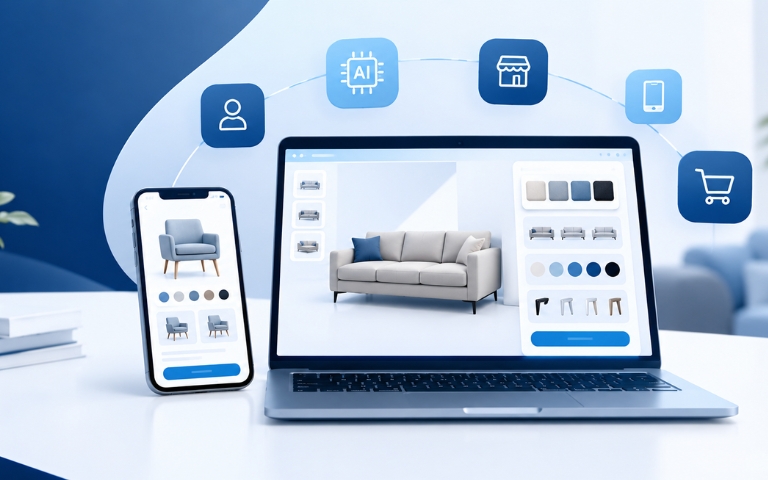
A product configurator can allow customers to select different options and build a product according to their requirements. Instead of simply looking at a static product image, shoppers can interact with the product and see how their selections affect the final result.
For example, a furniture store could allow customers to select:
- Upholstery materials
- Colors and finishes
- Product sizes
- Components
- Accessories
- Additional features
A visual product configurator can make these choices easier to understand while giving customers greater confidence before purchasing.
This is particularly valuable for businesses selling products with multiple options or configurations.
3. Visual Shopping Is Reducing Purchase Uncertainty
One challenge of online retail is uncertainty.
Customers may wonder:
Will this product look right? Will these options work together? What will my final product actually look like?
High-quality images, interactive product previews, 2D configurators, and 3D product experiences can help answer these questions.
Interactive visualization allows customers to see the consequences of their choices before completing an order.
This is especially useful for customized products where a standard product photograph cannot represent every possible combination.
As e-commerce becomes more visual and interactive, retailers have an opportunity to make product pages feel less like digital catalogs and more like interactive shopping experiences.
Check out: Revolutionize Your Custom Product Sales Process Using Visual CPQ in 2026
4. Artificial Intelligence Is Transforming Online Shopping
Artificial intelligence is becoming another major force behind the evolution of e-commerce.
AI can help retailers analyze customer behavior, improve recommendations, automate customer support, generate content, and assist shoppers throughout the buying journey.
The change is significant enough that AI-assisted shopping is becoming its own emerging commerce channel. Deloitte reported that 24% of consumers planned to make AI shopping their default in 2026.
AI is also influencing how customers discover products. Instead of browsing through dozens of product pages, shoppers may increasingly ask an AI system to find, compare, and recommend products based on their requirements.
For retailers, this means product information needs to be clear, structured, accurate, and easy for both customers and AI systems to understand.
5. Omnichannel Shopping Is Connecting Online and Offline Retail
E-commerce has not simply replaced physical stores.
Instead, online and offline shopping are becoming increasingly connected.
Customers might discover a product on social media, research it on a retailer’s website, visit a physical store, and then complete the purchase online.
Another customer might see a product in a store and later purchase it through a mobile device.
This creates an omnichannel retail experience where customers expect consistent information, pricing, availability, and service across different touch-points.
The future of retail is therefore less about choosing between physical stores and e-commerce and more about creating a seamless experience across both.
6. Social Commerce Is Changing Product Discovery
Social media has also become an important part of the e-commerce journey.
Platforms such as Instagram, TikTok, Facebook, and other social channels allow brands to showcase products where customers are already spending their time.
According to Salesforce’s Connected Shoppers research, 53% of shoppers discover products on social platforms.
This means the path from discovery to purchase is becoming shorter.
A customer can see a product in a social post, explore it, visit the online store, customize it, and purchase it—all within a connected digital journey.
For retailers, this makes engaging product content increasingly important.
7. E-Commerce Is Making the Shopping Experience More Convenient
Convenience remains one of the strongest advantages of e-commerce.
Customers can shop at any time, compare products quickly, access more choices, and complete purchases without visiting a physical store.
Modern shoppers also expect convenient delivery, flexible payment methods, easy returns, and responsive customer support.
Research from DHL’s 2026 E-Commerce Trends Report highlights how delivery, returns, AI, payments, and sustainability are all influencing modern e-commerce expectations. The study surveyed 29,000 shoppers and 5,800 e-commerce businesses across 29 countries.
Retailers therefore need to think beyond the checkout page. The entire customer journey—from discovery to delivery and post-purchase support—can influence whether customers return.
8. Trust and Transparency Matter More Than Ever
Technology can improve e-commerce, but customers still need to trust the businesses they buy from.
Privacy, payment security, product information, delivery expectations, reviews, return policies, and transparent pricing all contribute to customer confidence.
Personalization also needs to be handled responsibly.
Businesses should be transparent about how customer information is used and provide clear value in exchange for personalization.
The goal should not simply be to collect more data. It should be to use information responsibly to create a better shopping experience.
The Future of E-Commerce and Retail
The future of retail will likely be more personalized, visual, connected, and intelligent.
AI will continue influencing product discovery and customer service. Social commerce will remain an important discovery channel. Omnichannel experiences will connect physical and digital retail. And product customization will give customers greater control over what they buy.
For retailers, the opportunity is to combine these technologies rather than treat them as isolated features.
A strong e-commerce experience could allow a customer to discover a product through social media, receive a personalized recommendation, customize the product using an interactive configurator, visualize the final result, purchase it online, and receive consistent support afterward.
That is the direction in which digital retail is moving.
How Product Configurators Support the E-Commerce Revolution
As customers demand more choice and personalization, businesses selling customizable products need better ways to manage the buying experience.
A product configurator can turn a complicated product-selection process into a guided and visual online experience.
With a WooCommerce product configurator, businesses can allow customers to select product options, personalize designs, visualize different combinations, and see pricing changes as they configure their products.
This can be particularly valuable for industries such as:
- Furniture
- Fashion and luxury
- Sporting goods
- Automotive
- Manufacturing
- Food and beverages
- Printing
- Gadget and Gifting
For WooCommerce stores, solutions such as WP Configurator can help turn product customization into an interactive part of the online shopping journey.
Conclusion
E-commerce is revolutionizing retail by changing more than where people shop. It is changing how products are discovered, evaluated, customized, purchased, and experienced.
Personalization, AI, social commerce, omnichannel retail, and interactive product experiences are creating new expectations for both consumers and businesses.
Retailers that continue to provide static, one-size-fits-all shopping experiences may struggle to meet these expectations. Businesses that embrace more personalized and interactive commerce have an opportunity to create stronger customer experiences and stand out in an increasingly competitive market.
The future of retail is not simply online. It is personalized, connected, visual, and increasingly interactive.


Cielo M.
Cielo M. is an experienced professional with specialization in pre-and-post sales support . She is helping businesses enhance their e-commerce platforms through customization and software integration. At WPConfigurator, she interacts with customers on daily basis and provide resolution on all the support requests. She is fluent user of word press, woo-commerce and creates demo which helps in bringing client imagination to life. Cielo is known for her ability to create tailored, user-friendly product configuration systems that meet the unique needs of both businesses and consumers. Her passion for innovation and customer-centric design has made her a trusted leader in the field.
You might also enjoy


100% No-Risk Money Back Guarantee
You are fully protected by our 100% Money Back Guarantee. If you aren’t completely satisfied within 15 days of purchase, you’re more than welcome to a full refund.