



On this page
In today’s market, consumers expect more than just high-quality products – they desire personalization, adaptability, and the ability to control the items they purchase. In response to this shift, mass customization has emerged as a transformative strategy that merges the efficiency of large-scale production with the uniqueness of custom-made goods.
As an expert provider of powerful product configuration tools, WP Configurator empowers brands to deliver customized experiences that align with the modern consumer’s demands. This blog delves into the concept of mass customization, its significance, the advantages and obstacles it presents, and how your business can successfully implement this approach.
What Is Mass Customization?
Mass customization is the process of providing customized products or services to individual customers with the efficiency of mass production. It combines the benefits of mass production, such as affordability and scale, with the personalization of tailor-made offerings.
Through tools like WP Configurator, businesses can enable customers to visualize, personalize, and purchase products directly on their websites. Customers can co-create their ideal product by selecting colors, materials, sizes, or features, without adding complexity to the buying process.
In contrast to traditional customization, which often results in high costs and long wait times, mass customization leverages digital innovation and modular product design to deliver personalized items quickly and efficiently.
Different Types of Mass Customization
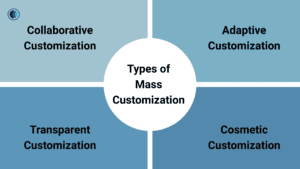
Mass customization is not a one-size-fits-all solution. Instead, it encompasses various approaches, each tailored to different business models and customer needs:
1. Collaborative Customization
In this model, customers actively participate in designing the product based on their preferences, and the company then manufactures it to match the customer’s input. Examples include custom-made furniture or tailored clothing.
2. Adaptive Customization
Here, the product remains the same for all customers, but it is designed to be modified or adjusted by the end-user. Examples include ergonomic chairs or software interfaces that users can personalize.
3. Cosmetic Customization
The product itself remains unchanged, but its presentation is altered to suit customer preferences. This could include custom packaging, colors, or branding that make the product feel personalized.
4. Transparent Customization
In this approach, the company provides a personalized product without explicitly informing the customer that it has been customized. For instance, online platforms offer personalized recommendations based on browsing behavior.
Understanding these different types of mass customization can help businesses select the most appropriate approach based on their product line, resources, and customer expectations.
What Are the Main Benefits of Mass Customization?
Embracing mass customization can offer a wide range of strategic benefits, particularly in the areas of customer experience, branding, and operational efficiency.
1. Enhanced Customer Satisfaction
Mass customization empowers customers to personalize products, fostering an emotional connection to their purchases and cultivating brand loyalty. Allowing customers to get exactly what they want can significantly improve their satisfaction.
2. Competitive Advantage
In crowded markets, product customization can help brands stand out. Offering tailored options can be a key differentiator that attracts more discerning consumers.
3. Increased Revenue Potential
Personalized products often carry a higher perceived value, enabling businesses to charge premium prices. Additionally, customers are more likely to complete purchases when they feel in control of the product design.
4. Reduced Inventory Waste
Since products are made-to-order, businesses can minimize excess inventory and waste, leading to cost savings and improved sustainability.
5. Valuable Consumer Insights
Every interaction with a product configurator provides data on popular features, trending combinations, and how customers engage with the brand. This data can be leveraged for product development and marketing optimization.
Leveraging Mass Customization in Marketing
Mass customization not only transforms the manufacturing process, but also the way products are marketed. It opens up opportunities for highly personalized marketing campaigns and stronger customer engagement.
-Personalized Product Recommendations
Leverage past customization behavior to suggest similar or complementary products. This can help increase average order value and lifetime customer value.
-User-Generated Content
Encourage customers to share photos or videos of their customized products on social media. This acts as free marketing and also builds a community around the brand.
-Email and Retargeting Campaigns
Send personalized emails or ads based on users’ previous interactions with the woocommerce configurator. For example, you could remind users about incomplete configurations or suggest product enhancements.
-Custom Landing Pages
Create landing pages highlighting specific customization options or collections, optimized for search engines and conversions. Examples could include “Design Your Dream Sofa” or “Create Your Own Sneakers”.
By integrating these strategies using a tool like WP Configurator, businesses can turn product customization into a powerful marketing asset for their online stores.
Read our blog : Customization in marketing
Challenges Related to Mass Customization
While the advantages of mass customization are clear, implementing it is not without its challenges. Understanding and addressing these obstacles is crucial for success.
1. Complex Operation
Managing the production and delivery of highly personalized products requires more flexible and responsive supply chains, which can be difficult to coordinate.
2. Significant Initial Investment
Developing the necessary infrastructure for customization, such as a visual product configurator, modular product design, and automated production, can involve substantial upfront costs.
3. Risk of Overwhelming Customers
Providing too many options can overwhelm customers, leading to decision fatigue and abandoned purchases. It’s essential to strike the right balance between flexibility and simplicity.
4. Quality Assurance Difficulties
With numerous product variants, maintaining consistent quality becomes more challenging. Quality assurance protocols need to be adapted to handle the variable outputs.
5. Importance of System Integration
For customization to function smoothly, your website, configurator, ERP, CRM, and manufacturing systems must work together seamlessly. Without proper integration, errors and delays can occur.
Mass Customization Examples
Many industry leaders have found success in leveraging mass customization to create unique and engaging customer experiences. Let’s take a look at a few real-world examples:
- Nike By You enables customers to design their own shoes, allowing them to select colors, materials, and add personalized text.
- Coca-Cola’s “Share a Coke” campaign customized bottle labels with people’s names, transforming a mass-produced product into a personalized gift.
- Tesla allows buyers to customize a wide range of features online, from color and wheels to interior finishes and software capabilities.
- Warby Parker provides virtual try-on tools and frame customization options to make eyewear shopping a more personalized experience.
Additionally, our clients at WP Configurator – ranging from fashion brands to furniture makers – empower their customers to visualize and personalize products in real-time on their websites.
Mass Customization Strategy
Here is the mass customization strategy :
1. Identify Customizable Features
Begin by pinpointing the elements of your product that can be personalized without disrupting production, such as color, material, or add-ons.
2. Implement a Product Configurator
Leverage a robust tool like WP Configurator to allow customers to easily select and visualize product options. Ensure the product configurator software is intuitive, responsive, and seamlessly integrated with your existing eCommerce platform.
3. Develop Modular Product Designs
Design your products using interchangeable components. This modular approach facilitates customization while maintaining production efficiency.
4. Automate Where Possible
Leverage automation tools to streamline processes, from order processing to file generation for manufacturing. This can reduce human error and shorten delivery times.
5. Provide Guidance to Customers
Help customers make informed choices by offering clear visuals, tooltips, filters, and templates. Avoid overwhelming them with too many options at once.
6. Collect and Analyze Data
Utilize customer behavior data to enhance the customization experience and guide future product development. This insight can also inform your marketing strategies.
7. Test and Iterate
Monitor key performance indicators, such as conversion rates, order values, and user engagement, to identify areas for improvement. Remember, mass customization is an ongoing process that evolves alongside your customers.
Conclusion
Mass customization is not just a fad – it’s a revolutionary way of designing, marketing, and delivering products in the digital era. For businesses, it presents a strategic chance to differentiate themselves, enhance customer satisfaction, and drive revenue growth.
At WP Configurator, we’re excited to offer the tools that make this possible. Our visual configurator enables seamless customization experiences for customers while ensuring efficiency for businesses.
If you’re prepared to leverage the power of mass customization, we’re here to assist you.


WPConfigurator Dev
Archie is a WordPress specialist with a strong background in technical support, website customization, and e-commerce solutions. He focuses on helping businesses improve their platforms through efficient configurations and seamless integrations. At WPConfigurator, he assists clients with setup, troubleshooting, and optimizing their overall website experience. He is highly proficient in WordPress and various modern web tools.
You might also enjoy


100% No-Risk Money Back Guarantee
You are fully protected by our 100% Money Back Guarantee. If you aren’t completely satisfied within 15 days of purchase, you’re more than welcome to a full refund.